Tuesday, 27 June 2017

Computer Fails In Space

We use computers or a similar technology such as a smartphone or any smart gadget in our daily lives. We use it for personal use, school, work, or leisure. The popularity of these smart gadgets has brought the World Wide Web even closer to the masses, thus the use of social media and the Internet has also catapulted into fame. Today, you can’t see a home without a personal computer or laptop to help them stay connected to the web.

These tech advances are even more crucial when it comes to space technology. Flying rockets, manning the space station, and sending astronauts or robots to explore uncharted planets is a big risk and challenge you can’t just easily do so without the help of advanced computing technology. Unfortunately, the technology is not always reliable and problems arise that requires immediate solutions because these trips to space aren’t just risky but mighty expensive too.

The primary device failed on Saturday, leaving the $100bn orbiting laboratory to depend on a backup system to route commands to its solar power system, radiators, cooling loops and other equipment.

The station's current five-member crew from the United States, Russia and France were never in any danger, the National Aeronautics and Space Administration said in a statement.

Station commander Peggy Whitson and flight engineer Jack Fischer, both with NASA, will partner for the spacewalk, which is expected to last two hours, the US space agency said.

Earlier on Sunday, Whitson assembled and tested a spare electronics box to replace the failed device, which had been installed during a spacewalk on 30 March, said NASA spokesman Dan Huot.

NASA's last emergency spacewalk took place in December 2015 when two US astronauts left the station to release the brakes on a robot arm's mobile transporter.

(Via: https://www.independent.co.uk/news/science/nasa-international-space-station-iss-computer-spacewalk-broken-mission-emergency-a7749956.html)

Modern technical computing devices are crucial to the success of space launches and the various space exploration programs. It is not an easy feat to send a man to space or make sure they survive the long months manning the International Space Station. They need sophisticated computing technology that can keep them safe all the time and not use an untested technology that will not only compromise the mission but endanger their lives too.

The 50-pound data relay box, known as a multiplexer-demultiplexer, or MDM, is one of two "tier 2" command and control computers mounted in the station's power truss that route commands to a variety of critical systems and relay telemetry from them to the ground. While the one operational tier 2 MDM can handle the full load, NASA managers opted to replace the failed box as soon as possible to restore full redundancy.

And so, Whitson and Fischer will venture back outside just 11 days after completing their most recent excursion on May 12, switching their spacesuits to battery power around 8 a.m. to officially kick off U.S. EVA-43.

Whitson checked out a replacement MDM Sunday and she will install it by herself Tuesday, working on the front side of the station's power truss. The box is about the size of a small microwave oven.

While Whitson focuses on replacing the failed MDM, Fischer will mount two antennas on the Earth-facing side of the Destiny laboratory module to improve communications with spacewalkers.

(Via: http://www.cbsnews.com/news/failed-computer-requires-quick-spacewalk-repair/)

You see just how big of an impact computers have on space missions especially when they don’t work out as planned. In this case, the problem was said to be a hardware issue. The space station actually uses as many as 44 MDM computers that have total control of everything in the lab. When one of them fails to work, it can be disastrous to everyone on board so it must be taken cared of immediately. Hence, there is the need for the urgent spacewalk by no other than Whitson herself who also installed the device about a couple of months ago to ensure everyone’s safety.

While only a handful of people get the rare opportunity to work as professional astronauts, many of us deal with computers every day. Like the incident in space, the hard drive is also one of the most vulnerable components of your computer and its failure can be disastrous especially if you don’t have a backup in place. If you find yourself in a similar situation, check out this link to learn more about hard drive recovery service: http://www.harddriverecovery.org/blog/how-to-choose-a-hard-drive-recovery-service/. To give you more insight on the types of data recovery tools often used to recover data, this may probably help: http://www.harddriverecovery.org/blog/data-recovery-tools/.

The blog post Computer Fails In Space Read more on: http://www.harddriverecovery.org


source http://www.harddriverecovery.org/blog/computer-fails-in-space/

Saturday, 24 June 2017

Beefing Up Servers For The Cloud

We are in a digital age that is quickly overwhelming humanity with mind-boggling technologies year after year. While it seems that the majority of mankind has openly embraced technology in their lives (especially smartphones and smart gadgets), there are still countless technologies out there that baffle us or we are yet unaware of for good measure. For example, we are all aware of cloud computing and even make use of cloud storage ourselves but that mostly describes what we know about this rising technology.

We know so little about how servers work in cloud computing. We just know that the cloud must need lots of servers to provide storage for all the data coming its way, and we are talking about lots and lots of data from all corners of the world. Fortunately, companies into cloud computing like Amazon are taking care of this matter and ensure our data stay safe and accessible to us in the cloud, so we need not worry about it ourselves.

Organizations make use of cloud infrastructure to take help of cloud computing to perform their day to day work to continue their operations. Cloud infrastructures are typically accessed using a pay-per-use model, unlike structures of payment that enable users to subscribe to vendor services for a set price or subscription-based pricing models. Instead of purchasing cloud infrastructure from a provider, organizations can also build their own cloud infrastructure in their premises. An organization using a service provider cloud is termed as public cloud; when an organization uses its own infrastructure, it is termed as a private cloud; and when an organization uses bits of public and private infrastructure, it is termed as a hybrid cloud.

Cloud infrastructure empowers the organization or company to manage traditional workload data by using an open private cloud deployment model. Organizations deliver cloud constructed cohesive infrastructure as a service in order to make new investments, technologies, and upgrade to better capture and position them in the market and to improve manageability. Cloud infrastructure services are generally used across all major verticals such as government, telecom, healthcare, banking, manufacturing, financial services, and others. The global adoption rate of cloud infrastructure services is increasing due to the growing implementation rate in Asia Pacific, Middle East & Africa, and Latin America regions.

(Via: http://www.military-technologies.net/2017/05/23/cloud-infrastructure-market-trends-and-forecast-by-2024/)

The people’s preference for doing most things online and the number of digital documents and data they accumulate requires far more sophisticated and extensive data storage management than your traditional hard drive can provide. Moreover, the use of mobile gadget continually rise along with the increase in businesses taking their business to the web means there is a greater need for reliable data storage more than ever. The cloud provides the solution we have all been looking for without driving us insane.

Hitachi will supply IBM-made mainframe computers loaded with its own operating systems starting in fiscal 2018, beating a retreat from hardware development in the age of cloud servers.

The arrangement was announced Tuesday. Hitachi will continue developing operating systems for mainframe machines. New products will offer improved compatibility with Hitachi's "internet of things" platform Lumada. 

Mainframes have been widely used across Japan's public and private sectors for in-house computer systems since they emerged in the 1950s. Japan was a particularly big market, with Hitachi, IBM, NEC, Fujitsu and others all competing for a piece of the pie at one point. 

(Via: http://asia.nikkei.com/Business/Deals/Hitachi-IBM-to-collaborate-in-mainframes-in-the-cloud-era)

Amazon may have dominated the cloud business industry but perhaps not for long as Hitachi and IBM have teamed up and finally came to terms with the reality that cloud computing is the norm of data management and storage these days. It may be hard to beat Amazon’s achievements in cloud computing but the two will try their best to beef up their own servers and tap the cloud market that is quickly growing by the minute.

For those businesses that haven’t yet shifted from traditional data storage to that of the cloud such as the use of a RAID server, check this link regarding its server recovery: http://www.harddriverecovery.org/server-recovery/. On the other hand, individuals with data recovery issues can benefit from this: http://www.harddriverecovery.org/clean_room.html. No need to go far because you can count on us to help you with most of your hardware and server needs and issues.

The following blog article Beefing Up Servers For The Cloud Read more on: Hard Drive Recovery Group


source http://www.harddriverecovery.org/blog/beefing-up-servers-for-the-cloud/

Thursday, 22 June 2017

Private Servers For Dummies

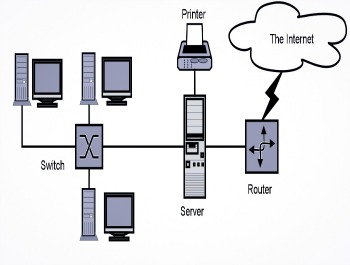
When we think of servers, we often picture out stacks of these tech wonders housed in pristine environments of major tech companies. This program supports other computer programs in one or more computers used mostly by big enterprises. There are actually different server types depending on their purpose. However, have you ever thought of getting one for yourself? The rise of private servers among small business owners is growing in popularity these days, so it might be an option for you to consider anytime soon.

In layman’s term, a private server is a virtual machine that one administers privately. You don’t just place a server in any location because it often comes within a group. Moreover, servers need sufficient power supply and a stable Internet connection aside from them being obviously noisy too. And just like laptops and computers, you can buy a private server in a similar manner these days.

Virtual Private Servers (VPS) have taken the small business world by storm. The advantages offered by VPS are considerable and can save any business a lot of money, but are more obvious in the small business community where a few thousand dollars can mean the difference between success and failure.

A VPS removes the need for your company to have its own physical servers. Access to a VPS gives your company the same advantages of having a physical server, but the operating system is run on the cloud. Anything that can be done on a physical server can be accomplished on a VPS without the expense of owning or leasing the physical equipment.

A small business that wants to save money on operating costs but has the need for a dedicated server can find a substantial number of companies on the internet that can fill their needs, but not all of these companies are created equal. Cost, security, performance benchmarks and other factors vary from company to company and there are tradeoffs for the customer to consider.

(Via: https://www.techworm.net/2017/05/virtual-private-servers-5-things-look-taking-small-business-online.html)

Cost is one of the factors you have to consider when deciding whether a private server will work for your burgeoning business venture or not. Find out if what it offers can compensate for the cost you are shelling out on such an investment. Next is security as cyber crimes are increasingly becoming common these days. Even big and global brands aren’t safe from these cyber hackers.

Lawyers on both sides of a debate over the authority of the state's sheriffs to bar private process servers from working in their counties were pressed by an active Georgia Supreme Court bench that hammered away at arguments questioning the plain language of the relevant statute and a "conspiracy" among the lawmen to freeze out private service in Georgia.

"It comes down to a gross abuse of discretion" for the sheriffs to enact a blanket, near-statewide ban on the servers and effectively nullify the law, said Parks Chesin & Walbert partner A. Lee Parks, representing the Georgia Association of Professional Process Servers (GAPPS).Some Georgia process servers work under the authority of the superior courts, which keep a list of such servers from whom litigants may choose.

But once a private server who is not on such a list fulfills the required training, bonding and other requirements, he or she must apply to a county sheriff for statewide certification.

Under the law, the sheriff must grant the certification which allows the server to work anywhere in the state. After that, the server can apply to work in any county, "provided that the sheriff of the county for which process is to be served allows such servers to serve process in such county."

(Via: http://www.dailyreportonline.com/id=1202786361064/Justices-Mull-Sheriffs-Conspiracy-to-Ban-Private-Process-Servers?slreturn=20170431081032)

Unfortunately, there may be some challenges to having your own private server but as long as you can prove that its use is for a good cause, you’d be able to use one as you see it fit. Always remember, though, to do your research first before you spend on a private server of your own. Aside from considering the cost, security, and performance, also include control and stability before making such a big purchase. You want to make sure your private server works for you and not become an additional burden that will take its toll on your business performance.

For the meantime, familiarize yourself with data recovery services through this link: http://www.harddriverecovery.org/data-recovery-services.html. Data loss is a constant fear for anyone who uses computers in their day-to-day. So, it makes perfect sense to learn more about hard drive recovery services when you still have time to prepare for it. When it comes to RAID servers, visit this link instead: http://www.harddriverecovery.org/server-recovery/. Or you can contact us for professional data recovery service at a price you can afford.

Private Servers For Dummies is republished from Hard Drive Recovery Group Blog


source http://www.harddriverecovery.org/blog/private-servers/

Monday, 19 June 2017

Computer Coding Basics You Should Know

Knowledge and understanding of computer are crucial today because computers are used in almost all industries and institutions. If you have a genuine interest in computers and can see yourself making a living (or even a career) out of this interest, then taking computer classes make perfect sense to learn the vital computing skills you need out there in the real world. Computer coding is one of those classes that are getting much attention these days. Basically, computer programs run on codes. These codes tell the computer what to do - from simple text documents to more complex computing tasks.

Even though most people are now using computers in their day-to-day, only a few truly understand how computers work. Some justify their ignorance by the fact that they often use smartphones daily instead of actual computers and that you can always call on tech support for help for most of your computing troubles but wouldn’t it be cool to grasp what happens inside that expensive and sleek device most people and businesses can now live without.

College students have flooded into computer science courses across the country, recognizing them as an entree to coveted jobs at companies like Facebook and Google, not to mention the big prize: a start-up worth millions.

The exploding interest in these courses, though, has coincided with an undesirable side effect: a spate of high-tech collegiate plagiarism. Students have been caught borrowing computer code from their friends or cribbing it from the internet.

“There’s a lot of discussion about it, both inside a department as well as across the field,” said Randy H. Katz, a professor in the electrical engineering and computer science department at the University of California, Berkeley, who discovered in one year that about 100 of his roughly 700 students in one class had violated the course policy on collaborating or copying code.

(Via: https://www.nytimes.com/2017/05/29/us/computer-science-cheating.html?_r=0)

Computer program/ software involve working with algorithms. It may not mean much to you but these computer commands or instructions makes your computer do lots of things for you. Experts in the field no longer consider coding as an engineering feat but more of an art because you basically create lots of unarguably wonderful things with it.

It has become an everyday activity for kids, like going to swimming classes, football practice or ballet lessons. Every week thousands of children go off to computer coding classes.

Their parents may hope that the programming clubs, often facilitated by the voluntary group CoderDojo, will give them a headstart in life, propelling them to a highly-paid job with a dotcom - even if the mothers and fathers are not quite sure themselves what coding actually is.

"Everyone should learn how to programme a computer, because it teaches you how to think," Apple tycoon Steve Jobs insisted 20 years ago.

And it seems parents have taken the message to heart since CoderDojo was set up as a charity five years ago. The multi-national movement, which was set up in Cork, has provided free classes in coding for more than 70,000 people, both in Ireland and abroad.

(Via: http://www.independent.ie/life/family/learning/in-code-we-trust-the-benefits-of-giving-your-children-a-head-start-in-coding-35225092.html)

It’s not a bad idea to send young kids to coding school if they really want to. Never force them to do something they don’t like because it defeats the purpose of learning. However, if your kid doesn’t really like to dabble with computers just yet, you can ask them nicely to give it a try considering how increasingly important computers have become in our lives. It’s that vital that computer coding is now being considered to be integrated into the school curriculum similar to what Britain did.

While kids learn how to build websites among other equally cool things in these classes, there are some things they aren’t equipped yet to handle such as data recovery services. For the elite who are using Mac computer line, check out this link to learn more: http://www.harddriverecovery.org/mac-data-recovery/. For businesses using an server systems like RAID, http://www.harddriverecovery.org/raid-data-recovery.html may be what you are looking for.

Computer Coding Basics You Should Know is republished from http://www.harddriverecovery.org


source http://www.harddriverecovery.org/blog/computer-coding-basics-you-should-know/

Friday, 16 June 2017

Chips For Smartphones, Not As Food

Technology is a wonderful thing. It has actually given a new/different meaning to lots of things we used to know. Apple is not just a fruit. Blackberry isn’t either and same with chips. Tech companies may have gotten the inspiration from food in creating these world-changing innovations and it has forever changed the meaning of these things especially with smartphones. Who does not own a smartphone these days, right? Aside from not being cool, you miss out on a lot of things with a low-tech lifestyle. Social media and messaging apps are among the most popular features of these smartphones aside from popular games that forever erases the word boredom in your dictionary.

Smartphones also fuel your love for self-photography a.k.a. the taking of “selfies”. The latest smartphones often have high pixels and allow you to upload photos directly to your various social networking sites or even share to friends on messaging apps. High-tech mobile chips make all these things happen. It’s such a tiny object that holds just as much importance as any computer out there.

The Galaxy S8 may not be able to beat the iPhone 7 and iPhone 6s in speed tests, but it still delivers remarkable performance. The phone is the first one to offer users new 10nm chips from Qualcomm and Samsung, the same kind of chip technology that will be found in various other flagship handsets this year, including the iPhone 8. But chip manufacturing process is only part of the story. Sure the smaller chips get the more efficient and the faster they become, but these mobile chips are all based on ARM designs. So whenever ARM releases new chip designs, it’s good news for smartphone lovers.

ARM did exactly that at Computex — it announced a couple of new processors that are likely going to power next year’s phones, including the Galaxy S9 that Samsung is already working on.

These chips are the ARM Cortex-A75 that will likely be used by Qualcomm, Samsung, TSMC, and others to create flagship mobile chips, and the Cortex-A55 that will power many of the future mid-range handsets. Finally, there’s also a new Mali-G72 graphics processor for next year’s phones.

(Via: https://bgr.com/2017/05/29/galaxy-s9-snapdragon-845-chip/)

These new mobile chips spell the future. They aren’t just your typical chips that provide known features you already have in your mobile arsenal right now. You’ll now have a taste of augmented reality, machine learning, virtual reality, and artificial intelligence in the palms of your hand.

Back in March, ARM revealed a new technology called Dynamiq, which allows a combination of smaller, more power-efficient cores and larger, more powerful cores to be used on the same design. Previously, there needed to be an equal number of large and small cores. With a maximum of eight cores in a cluster, it’s now possible, for example, to have seven ‘Little’ A55 cores and one ‘Big’ A75. Not only does this offer more flexibility for manufacturers that use its designs, but the company says the Dynamiq family will be able to increase AI performance by more than fifty times over the next three to five years.

ARM says the “ground-breaking” Cortex-A75 boasts a 20 percent mobile performance boost over the older A73. It adds that the new processor can offer laptop-level performance while using the same amount of power as existing mobile processors. ARM sees the A75 being used in large-screen devices (laptops), servers, automobiles, and, of course, smartphones, where it will provide additional performance for advanced workloads such as machine learning. And thanks to improved instructions-per-clock efficiency, single-threaded performance is improved by around 20 percent.

(Via: http://www.techspot.com/news/69489-arm-new-processors-boost-future-smartphones-better-ai.html)

While you don’t really see it, these mobile chips make a world of difference to your entire smartphone experience. Design is not the only thing that sets smartphones apart like back in the days but what’s really in it, a.k.a. the mobile chip used. Nowadays, smartphones can be just as good as a regular PC. From single core to dual core and now quad core, it’s basically a mini PC or a handy computing device that you can take with you wherever you go.

If you don’t own a computer because you use your smartphone to do everything for you all the time, you spare yourself from the stress brought about by hard drive failures that plague most computer users. This link http://www.harddriverecovery.org/blog/hard-drive-failure-recovery-three-major-user-mistakes/ may be helpful for them even though smartphone users really need not bother themselves with these details at all. When looking for a data recovery service company to help you retrieve lost data because of a hard drive failure specifically on a Mac, this link may prove helpful to you.

The following post Chips For Smartphones, Not As Food was initially published on http://www.harddriverecovery.org


source http://www.harddriverecovery.org/blog/chips-for-smartphones-not-as-food/

Tuesday, 13 June 2017

Still In The Dark About Data Recovery Costs?

Data is such a precious commodity. We hear it far more often than we’d like to admit these days. It is why both individuals and businesses alike go to extreme measures to ensure their data is safe and accessible at all times because they would lose their business without it. It is not always cheap but better to be safe than sorry. Once you lose your data, getting it back isn’t always that easy and you may have to shell out a lot of money in trying to retrieve it.

Fortunately, there are lots of companies that are into data recovery, so you can be sure to get your data back and save yourself from all the headaches. If there is one bad aspect of data recovery, though, it has to do with its pricing. The prices data recovery companies are asking can be a lot and businesses and individuals aren’t always so thrilled to find out how much they have to pay just to get their data back from oblivion.

There’s a lot that’s commonly misunderstood about the art of data recovery. Many would-be customers underestimate just how much we can retrieve from a damaged hard drive with the right tools and techniques, while others make the mistake of assuming they’ve permanently deleted their files when getting them back would, in fact, be trivial. Others wrongly assume that modern storage methods like flash memory are the Achilles’ heel of the data recovery engineer.

Most of all, though, customers misunderstand how much it costs. Their price expectations at the outset of a job vary wildly, and the quotes they receive from data recovery companies sometimes serve only to muddy the waters – certain costs may be hidden, the capabilities of the provider unproven and the amount of recoverable data unknown.

Here is an essential fact that you should know about the sophisticated and techie art of data recovery:

The first rule of data recovery: You pay for time, not quantity

The first thing you should know about data recovery pricing is that you’ll almost always be charged by the time the job takes, not the amount of data you need to recover, and any company that says differently should be eyed with suspicion.

Think about it: if you bring a shattered hard drive into the shop, the recovery job is essentially the same regardless of whether you’re attempting to grab a single file or several gigabytes of data. The real work is getting the drive to function again, not to transfer some or all of its contents to a fresh medium.

(Via: http://blog.krollontrack.co.uk/concepts-explained/data-recovery-pricing-explained/)

Data recovery pricing often depends on the media type involved, the file system in place as well as the extent of the damage among other factors. Data recovery is kind of expensive with some companies charging a minimum of $500 for just a single recovery while some charge it depending on the amount of data to be retrieved.

Online backup and disaster recovery provider Axcient today said it is offering its on-premise BDR virtual appliance free of charge to managed service providers, encouraging them to deploy the technology at customer sites.

Axcient Free, available for download from the company, provides full recovery of data for up to three servers and 20 terabytes of data, CEO Justin Moore told MSPmentor.

“This is a highly disruptive, free version of our platform,” he told me. “We are giving away the local part of our recovery-as-a-service platform.”

MSPs can think of this as a freemium offer. While organizations will still have to pay to replicate the backup to the cloud, they can also just use the free local backup if they wish as an easy way to dip their toes into BDR. Buying the cloud service is not required to get the free local backup.

(Via: http://mspmentor.net/backup-and-disaster-recovery/040914/axcient-free-disrupts-local-backup-and-recovery-pricing)

This initiative is somewhat unheard of in the industry as most companies offer their service for a specified fee. This is a breath of fresh air for businesses and individuals that use data in their daily operation because it’s free. The data storage management of businesses may fail them and the last resort has to be the hiring of the expert services of data recovery firms that don’t come in cheap.

Visit this link to learn more about data recovery pricing http://www.harddriverecovery.org/pricing.html or even ask for our expert help when you face such a situation yourself. You shouldn’t fret over data loss problems nor should you spend a fortune to get it back once you lost it. If you are using an older storage version, this link: http://www.harddriverecovery.org/raid-pricing.html may offer valuable insights on RAID recovery pricing. We can also help you out on this, so don’t hesitate to call us for help.

The following blog post Still In The Dark About Data Recovery Costs? is courtesy of Hard Drive Recovery Group


source http://www.harddriverecovery.org/blog/data-recovery-costs/

External Hard Drives = Data Loss No More

Computer users know very well how frustrating it can be to deal with data loss. You can lose almost all the data saved on your PC in a snap. That means you have no choice but to say goodbye to all the photos stored in there; not to mention the videos, songs etc. you have painstakingly downloaded only to disappear without any trace. This data is a part of who you are, a virtual remembrance for the virtual life you have lived so far. But thanks to the many vulnerabilities of a regular computer, you can never tell when your hard drive will give up on you.

To save your data (and your memories as well as your sanity), make sure you have a backup plan in place in the form of an external hard drive to ensure no data is lost forever. Yes, you don’t need a genius solution to this age-old data loss dilemma. All you need is just a conventional technology and some common sense to foresee that such a disaster may strike (because your computer isn’t a super machine), so you need to prepare for it beforehand.

Whether it’s for backing up your entire computer or giving yourself some extra file space to work with, everyone needs an external hard drive. But with so many models on the market to choose from, which ones are worth getting? There are many factors to consider here, but the primary ones are storage space, speed, portability, and reliability. With that many factors, it’s impossible to definitively call one external drive the “best,” but it is possible to find five drives that, collectively, will fit the needs of anyone.

(Via: https://www.digitaltrends.com/buying-guides/best-external-hard-drives/)

Even though external hard drives have been around the market for quite a while now, many computer users actually admit that not all of them own one yet even though they know the importance and benefits of having a backup storage. Aside from the usual threats of hard drive failure issues you face and cybercrimes like ransomware can also take you by surprise. Cyber crooks can take all your files from you without warning. Even paying the ransom in bitcoins is not an assurance that you can really get your data back. So, it’s just common sense to buy an external hard drive and save yourself from all the hassles brought about by unforeseen data loss. After all, there are cheaper brands in the market and you can choose the size you want depending on your data storage requirements.

But I found a site, or forum - I can't remember which - where someone was selling Bitcoin. I think I paid well above the quasi-official exchange rate for the coins; who really cares about the difference between 1.2 cents and 1.5 cents when you're only spending $25? I'd read something fun about them, probably in Wired, and wanted to understand them better, so I bought some.

Eventually, I had the Bitcoin sitting in a cold storage wallet. An offline file, outside of any online bank or exchange or digital storage facility. A text file, basically, with a long string of cryptographic hash that represented an encryption key. I didn't trust any online service not to crash and lose my investment.

I put it on a hard drive.

I used the hard drive for a whole bunch of things. Storing pirated music and movies and TV series, a portfolio of my best tech writing work, all my uni assignments, photos of friends and family and the couple of holidays that I'd taken. I took the hard drive with me when I moved out of home with my long-term girlfriend, and used it for all the things you use a portable hard drive for.

In the year or so that followed, we broke up, and I moved back home. As I was moving out I used the opportunity to clean up some of the accumulated tech detritus that comes with being a technology journalist. USB sticks, 3D glasses, USB cables, PC components. All that sort of literal junk. A pile of junk that went into a skip. That hard drive was in the pile, and it had that damn annoying click. I had better portable hard drives.

I didn't need, or care about, anything on it. The photos were backed up to another portable drive, my writing was in Google Drive, the music was on my desktop PC.

So I threw it away.

(Via: http://www.smh.com.au/technology/technology-news/i-threw-away-48-million-in-bitcoin-20170528-gwf4jz.html)

Bitcoins are a really big thing these days. Although many people are still clueless about it, it is the perfect digital currency for cyber criminals who engage in crimes like ransomware. The article above can be really quite funny or annoying considering how much the bitcoin currency’s value has soared over the years. A $25 investment could well be worth around a million dollars in value in current time.

The major drawback to bitcoin use is that its value constantly fluctuates. No need to worry, though, if you don’t own one today because many computer users actually don’t. Meanwhile, a major problem you can relate to and probably have experienced once or twice in your lifetime (or even more) is damaging your hard drive. This article http://www.harddriverecovery.org/damaged-hard-drive.html got you covered. And since you often ask an expert computer technician to work on your damaged hard drive, it helps to check out this link http://www.harddriverecovery.org/pricing.html for data recovery costs, so you don’t get ripped off by unscrupulous computer pros.

External Hard Drives = Data Loss No More was first seen on HDRG


source http://www.harddriverecovery.org/blog/external-hard-drives-data-loss-no-more/

Data Recovery Expert: How To Celebrate A Holiday In Lockdown

Irvine, CA-based Hard Drive Recovery Group (HDRG) is encouraging their community to avoid being disheartened by the fact that they have had ...